Xhaome: Where Monoline Graffiti Meets Brush Stroke Elegance
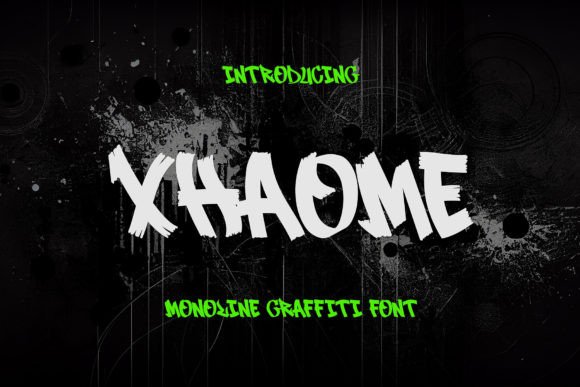
There is a distinct moment in design when you realize the standard sans-serifs and polished serifs just aren’t cutting it. You need something that breathes, something that carries the weight of human handiwork but still holds the structural integrity required for modern branding. This is where Xhaome enters the conversation. It isn’t just another display font; it is a mesmerizing fusion of monoline graffiti aesthetics and the organic elegance of brush stroke flair. For designers who have spent years trying to balance the untamed vigor of street art with professional polish, Xhaome offers a solution that feels both raw and refined.
The typeface effortlessly merges two seemingly contradictory worlds. On one hand, you have the rigid, consistent width typical of monoline scripts, which ensures legibility and structure. On the other, you have the natural rhythm of handcrafted brushwork, complete with subtle variations in pressure and flow. The result is the epitome of urban sophistication, underlined by a rough-hewn yet fashionable aesthetic. It is the quintessential typography for adding a pure, authentic expression to any design project that demands attention without sacrificing class.
Bridging the Gap Between Street Culture and High-End Branding
One of the most compelling aspects of Xhaome is its versatility across industries that traditionally sit on opposite ends of the spectrum. Consider the craft beverage industry. A local brewery or a small-batch coffee roaster often struggles to communicate their artisanal quality while maintaining a cool, contemporary edge. Using a traditional script might feel too delicate, while a blocky industrial font can feel cold. Xhaome sits perfectly in the middle. It injects a raw urban feel into packaging labels, suggesting that the product inside is handmade, authentic, and rooted in community culture.
Similarly, in the fashion and apparel sector, this typeface has become a go-to for brands looking to capture the "athleisure" or "streetwear" vibe without looking generic. When applied to t-shirt graphics, hoodie prints, or lookbooks, Xhaome adds an audacious, dynamic presence. It doesn’t just sit on the fabric; it interacts with it. The brush stroke flair gives the impression that the text was painted directly onto the garment, creating an immediate emotional connection with consumers who value individuality and self-expression.
Practical Applications in Event Marketing and Poster Design
If there is one arena where Xhaome truly shines, it is in event promotion. Whether you are designing posters for a music festival, a gallery opening, or a pop-up market, the goal is always the same: stop the scroll or catch the eye from across the street. The font’s ability to convey energy makes it ideal for these high-impact scenarios.
- Music Festivals: Use Xhaome for headliner names to convey the loud, energetic atmosphere of live performance. The rough edges mimic the distortion of amplified sound.
- Art Exhibitions: For contemporary art shows, the font acts as a bridge between the viewer and the artwork, suggesting that the exhibition itself is a living, breathing entity rather than a static display.
- Community Workshops: Even for smaller, local events like skate clinics or graffiti workshops, the typeface signals inclusivity and creativity, inviting participation rather than just observation.
The key here is scale. Because Xhaome retains the clarity of a monoline structure, it remains readable even when blown up to massive proportions for billboards or building wraps. Yet, when viewed up close on a flyer, the intricate details of the brush strokes reward the viewer with a sense of craftsmanship.
Why Digital Creators Are Embracing Urban Sophistication
In the digital realm, authenticity is currency. Social media managers and content creators are constantly searching for visual elements that break the monotony of corporate minimalism. Xhaome serves as a powerful tool for overlay text in video content, Instagram stories, and YouTube thumbnails. Its dynamic nature adds movement to static images, making posts feel more alive and engaging.
For web designers, incorporating Xhaome into hero sections or call-to-action buttons can significantly enhance user engagement. It works particularly well for portfolios of photographers, videographers, and creative agencies who want to showcase their work with a backdrop of personality. However, it is crucial to use it sparingly in digital interfaces. Due to its decorative nature, it is best reserved for headlines and short phrases rather than body text, ensuring that the user experience remains smooth and accessible.
Considerations Before Choosing Xhaome
While Xhaome is the poster child for designers adept at weaving their creations with distinct urban charm and attitude, it is not a one-size-fits-all solution. Understanding its limitations is just as important as recognizing its strengths. The font’s character lies in its imperfections and organic flow. This means it may not pair well with highly geometric, technical, or corporate fonts unless you are intentionally aiming for a stark contrast.
Another consideration is color and background. Because Xhaome relies on the interplay of thick and thin strokes, it needs sufficient contrast to be legible. Placing it over busy, textured backgrounds can cause the finer details of the brush flair to get lost. It performs best against solid colors or simple gradients that allow the typography to take center stage. Additionally, while it is excellent for short headlines, avoid using it for long paragraphs. The very features that make it beautiful—the irregularities and stylistic flourishes—can become fatiguing to read in large blocks of text.
Crafting Authentic Narratives with Typography
Ultimately, the decision to use Xhaome should be driven by the story you want to tell. If your brand or project is about breaking norms, celebrating individuality, or connecting with a younger, culturally aware audience, this typeface is an invaluable asset. It allows you to bypass the sterile feel of default system fonts and inject soul into your design.
Think about the message behind your project. Are you launching a sneaker line that pays homage to 90s hip-hop culture? Xhaome captures that nostalgia while feeling current. Are you rebranding a tech startup that wants to appear approachable and human-centric rather than robotic? The handcrafted element of the font softens the technological edge, making the brand feel more relatable.
The beauty of this fusion style is that it respects the viewer’s intelligence. It doesn’t shout for attention through sheer volume or neon colors; it draws people in through texture and rhythm. It suggests that there is a human behind the design, a person who cares about the details. In a world increasingly dominated by AI-generated perfection, that human touch is more valuable than ever.
Final Thoughts on Implementation
To get the most out of Xhaome, experiment with spacing and sizing. Don’t be afraid to let the letters breathe. Tight kerning can sometimes obscure the unique entry and exit points of the brush strokes, while generous whitespace can highlight the fluidity of the design. Pair it with clean, neutral sans-serifs for body copy to create a balanced hierarchy that guides the eye naturally from the bold headline to the informative details.
Whether you are a seasoned graphic designer or a small business owner handling your own marketing, embracing a typeface like Xhaome can elevate your visual identity. It is more than just a font; it is a statement of intent. It says that you value creativity, authenticity, and the vibrant energy of urban life. By integrating this mesmerizing fusion of graffiti and brushwork into your projects, you are not just designing; you are curating an experience that resonates on a deeper, more emotional level.