Anubis Mythical: Evaluating an Egyptian-Inspired Typeface for Branding
When selecting typography for a project rooted in history, mythology, or adventure, designers often face the challenge of balancing thematic authenticity with modern legibility. Anubis Mythical emerges as a specialized solution in this niche, offering a distinct visual language inspired by ancient Egyptian aesthetics. This typeface is not merely a decorative element but a versatile tool designed for specific applications such as badges, logos, and branding materials where a strong cultural narrative is required.
Understanding whether Anubis Mythical aligns with your design goals requires a close examination of its structural features, stylistic variations, and practical limitations. This evaluation aims to provide clarity for designers, brand managers, and hobbyists who are considering this font for their next creative endeavor.
Defining the Aesthetic and Structure
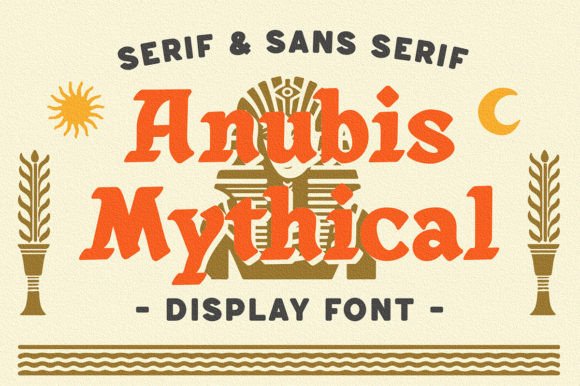
Anubis Mythical is characterized by its unique blend of serif and sans-serif qualities, creating a hybrid style that feels both ancient and contemporary. The glyph shapes draw heavily from hieroglyphic influences, incorporating angular lines and geometric precision that evoke the stone carvings of antiquity. However, unlike pure display fonts that sacrifice readability for style, Anubis Mythical maintains a structured baseline that supports functional use in shorter text blocks and headlines.
The font’s versatility is anchored in its three distinct styles: Regular, Rough, and Stamp. Each variant serves a different communicative purpose. The Regular style offers clean lines suitable for primary branding elements where clarity is paramount. The Rough style introduces texture and weathering, simulating the erosion of time on stone surfaces, which adds depth and historical weight to a design. The Stamp style provides a bold, inked appearance, ideal for creating the illusion of official seals or archival markings.
Additionally, the inclusion of ligature features enhances the typographic flow. Ligatures combine specific character pairs into single glyphs, reducing visual clutter and adding a custom, hand-crafted feel to logotypes. This attention to detail allows for a more polished final product without requiring manual vector editing.
Strategic Applications and Benefits
The primary benefit of Anubis Mythical lies in its ability to instantly establish a thematic context. For projects related to Egyptology, museum exhibitions, historical fiction, or adventure gaming, the font acts as a visual shorthand. It communicates "ancient mystery" and "authority" before the viewer reads a single word. This makes it particularly effective for:
- Logo Design: The strong geometric forms create memorable marks that scale well across digital and print media.
- Badge and Emblem Creation: The Stamp and Rough styles are inherently suited for circular or shield-shaped layouts common in patch designs.
- Packaging: Products such as specialty teas, spices, or artisanal goods can leverage the font to suggest exotic origins or traditional preparation methods.
From a workflow perspective, having three styles in one family reduces the need to source multiple complementary fonts. Designers can mix the Regular style for main titles with the Rough style for subheaders to create visual hierarchy while maintaining tonal consistency. This cohesion simplifies the branding process and ensures a unified identity.
Tradeoffs and Limitations
While Anubis Mythical offers significant aesthetic value, it is not a universal solution. Its highly stylized nature means it performs poorly in body text or long-form reading contexts. The intricate details that make it striking at large sizes can become muddy or illegible when scaled down for paragraphs or footnotes. Designers must resist the urge to overuse the font, restricting it to headlines, pull quotes, or short labels.
Another consideration is thematic saturation. Because the font is so strongly associated with Egyptian motifs, it may feel out of place in projects that require a neutral or modern corporate tone. Using Anubis Mythical for a tech startup or a financial institution could create cognitive dissonance unless the brand is specifically leveraging an "ancient wisdom" metaphor, which is a risky strategic move.
Furthermore, the "Rough" and "Stamp" textures, while visually appealing, can present challenges in certain printing processes. Low-resolution printing or small-scale merchandise may fail to capture the subtle distressing effects, resulting in a look that appears merely blurry rather than textured. It is essential to test proofs at actual size before committing to large production runs.
Decision-Making Insights: Is It the Right Fit?
To determine if Anubis Mythical is the appropriate choice for your project, consider the following criteria:
- Thematic Relevance: Does your project benefit from historical, mystical, or adventurous connotations? If the answer is yes, this font is a strong candidate. If the project requires neutrality, look elsewhere.
- Usage Scope: Will the text be primarily displayed in headlines, logos, or short phrases? Anubis Mythical excels in these areas. If you need a font for extensive body copy, pair it with a clean, neutral sans-serif instead.
- Medium Constraints: Are you designing for high-resolution digital screens or high-quality print? The detailed textures of the Rough and Stamp styles thrive in these environments. For low-fidelity outputs like faxed documents or small embroidery, the Regular style is a safer bet.
It is also wise to evaluate the competitive landscape. Many Egyptian-themed fonts rely on clichéd papyrus-like textures or overly complex hieroglyphic substitutions that hinder readability. Anubis Mythical distinguishes itself by prioritizing structural integrity alongside thematic flair. If you have previously struggled with other decorative fonts that felt gimmicky or unreadable, this typeface may offer the balance you seek.
Alternatives and Complementary Pairings
If Anubis Mythical does not fully meet your needs, consider what specific element is missing. If you require greater legibility for smaller sizes, a standard geometric sans-serif with slight historical cues might be more appropriate. If you need more extreme distressing effects, dedicated grunge fonts may offer heavier texture options, though they often lack the cohesive family structure found here.
For those who proceed with Anubis Mythical, pairing it correctly is crucial. Because the font carries significant visual weight, it pairs best with minimalist, neutral typefaces. A clean humanist sans-serif can ground the design, allowing Anubis Mythical to serve as the focal point without overwhelming the viewer. Avoid pairing it with other decorative or script fonts, as this can lead to visual chaos and dilute the impact of the Egyptian aesthetic.
Final Considerations for Creative Implementation
Unlocking the full potential of Anubis Mythical requires a disciplined approach to design. Use the ligature features to create unique logomarks that stand out from generic text treatments. Experiment with the interplay between the clean Regular style and the textured Rough style to add depth to flat designs. Remember that whitespace is your ally; giving the glyphs room to breathe enhances their architectural quality and improves readability.
Ultimately, Anubis Mythical is a specialized tool for specific creative narratives. It is not a everyday workhorse font, but rather a strategic asset for projects that demand a strong, historically infused identity. By understanding its strengths in branding and badge design, and respecting its limitations regarding body text and thematic scope, designers can leverage this typeface to create compelling, memorable visual experiences. Whether you are crafting a logo for a new board game, designing packaging for an exotic product, or creating promotional materials for a historical exhibit, Anubis Mythical offers a refined pathway to achieving an authentic ancient Egyptian flair.