Unlocking Creative Potential with Sweet Hysteria: A Comprehensive Guide to Playful Typography
In the vast landscape of graphic design, typography serves as the voice of visual communication. It is not merely about making words legible; it is about conveying emotion, setting tone, and establishing brand identity. Among the myriad of typefaces available today, Sweet Hysteria has emerged as a distinctive choice for designers seeking to inject personality and whimsy into their projects. This versatile, stylish, and playful display font offers a unique blend of charm and professionalism that resonates across a wide spectrum of applications, from intimate greeting cards to bold commercial headlines.
Understanding how to effectively utilize such a specialized typeface requires more than just installing it on a system. It demands an appreciation for its structural nuances, its psychological impact on the viewer, and its practical limitations. By exploring the characteristics and optimal use cases of Sweet Hysteria, creators can elevate their design work, ensuring that every typographic choice serves a strategic purpose.
The Anatomy of Playfulness: Defining the Aesthetic
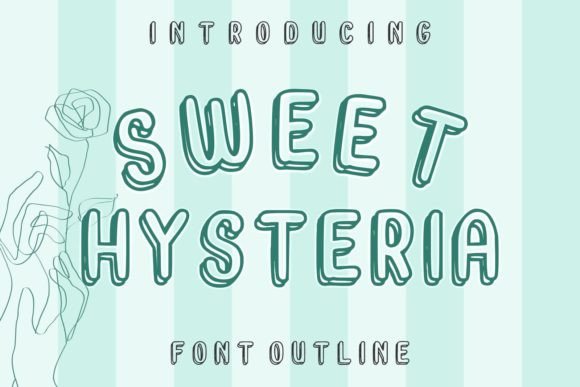
At its core, Sweet Hysteria is defined by its organic, hand-drawn feel. Unlike rigid geometric sans-serifs or traditional serifs that convey authority and stability, this font embraces irregularity. The strokes vary in thickness, mimicking the natural pressure changes of a brush or marker. This inherent imperfection is what gives the typeface its "human" touch, making it feel approachable and warm.
The letterforms often feature rounded terminals and slight tilts, which contribute to a sense of movement and energy. This dynamic quality is essential for capturing attention in a crowded visual environment. When a viewer encounters text set in Sweet Hysteria, the immediate subconscious reaction is one of lightheartedness. It suggests that the content behind the text is not overly serious, inviting the audience to engage with a sense of curiosity and joy.
However, "playful" does not mean "amateurish." The design maintains a high level of craftsmanship. The spacing, or kerning, is carefully balanced to ensure readability despite the decorative nature of the glyphs. This balance between artistic flair and functional clarity is what makes Sweet Hysteria a valuable asset for professional designers who need to communicate complex ideas in an accessible manner.
Strategic Applications in Modern Design
The versatility of Sweet Hysteria allows it to transcend specific industries, though it shines brightest in sectors that prioritize emotional connection. Below are several key areas where this typeface excels, demonstrating its adaptability.
Greeting Cards and Personal Stationery
Perhaps the most natural home for Sweet Hysteria is in the realm of personal correspondence. Greeting cards rely heavily on tone, and the font’s cheerful demeanor perfectly complements messages of celebration, gratitude, or affection. Whether used for birthday invitations, wedding save-the-dates, or holiday cards, the typeface adds a layer of warmth that standard fonts often lack. Designers can pair it with watercolor illustrations or simple line art to create cohesive, heartfelt designs that feel personally crafted rather than mass-produced.
Branding for Lifestyle and Food Industries
In the competitive markets of food, beverage, and lifestyle products, packaging design plays a crucial role in consumer decision-making. Sweet Hysteria is particularly effective for brands that want to appear artisanal, homemade, or boutique. Imagine a jar of small-batch jam, a craft beer label, or a bakery box. The font’s handwritten style suggests authenticity and care, qualities that modern consumers highly value. It helps differentiate products on shelves dominated by sterile, corporate typography, creating an immediate emotional hook.
Digital Headlines and Social Media Graphics
In the digital space, attention spans are short. Headlines must grab interest instantly. Sweet Hysteria works exceptionally well for blog headers, YouTube thumbnails, and Instagram posts. Its bold presence ensures that key messages stand out against busy backgrounds. For content creators focusing on lifestyle, travel, or DIY topics, using this font for titles can reinforce the friendly and engaging persona of their brand. It breaks the monotony of screen-based reading, offering a visual pause that encourages users to stop scrolling and read further.
Best Practices for Implementation
While Sweet Hysteria is powerful, its effectiveness depends on proper usage. Misapplication can lead to cluttered designs or reduced readability. To maximize its impact, designers should adhere to several guiding principles.
- Hierarchy is Key: As a display font, Sweet Hysteria is best suited for headlines, subheaders, and short phrases. It should not be used for body text. Long paragraphs set in this typeface can become difficult to read due to the varying stroke widths and decorative elements. Instead, pair it with a clean, neutral sans-serif font for the main content to create a balanced visual hierarchy.
- Whitespace Matters: Because the font has a strong personality, it needs room to breathe. Crowding letters or placing them too close to other design elements can diminish their impact. Generous whitespace around text set in Sweet Hysteria enhances its elegance and ensures that each letterform is appreciated.
- Color Psychology: The color chosen for the text can significantly alter the perception of the font. Bright, saturated colors like coral, teal, or yellow amplify its playful nature, making it ideal for children’s products or summer campaigns. Conversely, using muted pastels or deep earth tones can soften the font, making it suitable for more sophisticated, rustic, or vintage-inspired designs.
- Contrast and Backgrounds: Ensure sufficient contrast between the text and the background. Since Sweet Hysteria has intricate details, low-contrast combinations can cause the letters to blend into the background, reducing legibility. Solid backgrounds or subtle textures work best, while busy photographic backgrounds should be used with caution, perhaps requiring a solid color overlay behind the text.
Psychological Impact and Audience Reception
Typography influences how information is processed and remembered. Studies in cognitive psychology suggest that fonts perceived as "friendly" can increase trust and likability. Sweet Hysteria leverages this principle by evoking feelings of nostalgia and comfort. For educators and researchers creating materials for younger audiences or community-focused initiatives, this font can lower barriers to engagement. It makes educational content feel less intimidating and more inviting.
For business owners, understanding this psychological trigger is vital. If a brand’s value proposition centers on community, care, or creativity, using a font like Sweet Hysteria aligns the visual identity with the core message. It signals to the consumer that the brand is approachable and human-centric. However, it is crucial to recognize when this tone is inappropriate. In legal, financial, or medical contexts where seriousness and precision are paramount, the whimsical nature of Sweet Hysteria may undermine credibility. Contextual awareness is therefore essential for effective typographic selection.
Technical Considerations for Digital and Print
When implementing Sweet Hysteria across different media, technical factors must be considered to maintain quality. For print applications, such as brochures or packaging, ensure that the font file is embedded correctly and that the resolution is high enough to capture the fine details of the brush strokes. Vector formats are preferred to avoid pixelation at larger sizes.
In web design, performance is a critical factor. Custom fonts can increase page load times if not optimized. Using variable font formats or ensuring proper caching strategies can mitigate this issue. Additionally, fallback fonts should be specified in CSS to ensure that if Sweet Hysteria fails to load, the layout remains intact with a similar stylistic alternative. Testing the font across various devices and screen sizes is also necessary to ensure that the playful curves render correctly on both high-resolution retina displays and standard monitors.
Conclusion: Embracing Typographic Diversity
Sweet Hysteria represents more than just a trend in design; it is a tool for emotional expression. Its ability to convey warmth, creativity, and authenticity makes it an invaluable resource for a diverse range of professionals. From the hobbyist creating handmade cards to the marketing director launching a new artisanal product line, this font offers a bridge between aesthetic appeal and functional communication.
By understanding its strengths, respecting its limitations, and applying it with strategic intent, designers can harness the full potential of Sweet Hysteria. It invites us to move beyond the safe confines of standard typography and explore the expressive possibilities of language. In a world increasingly driven by digital interaction, the human touch provided by such a typeface reminds us of the power of personal connection in design. Whether used for a bold headline or a delicate invitation, Sweet Hysteria continues to prove that style and substance can coexist harmoniously, creating visuals that are not only seen but felt.