Integrating Borxe: A Strategic Approach to Modern Display Typography
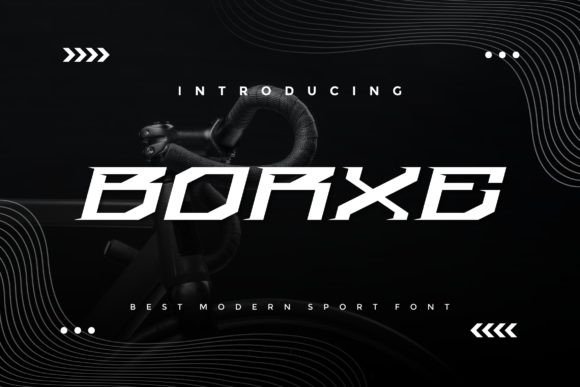
In the crowded landscape of digital design, typography serves as the primary vehicle for brand voice and visual hierarchy. While body text demands readability and neutrality, display fonts carry the emotional weight of a project. Borxe emerges in this space not merely as a stylistic choice, but as a functional asset for creators who require immediate visual impact. As a cool and modern display font, it bridges the gap between contemporary aesthetic trends and practical usability. Understanding how to integrate Borxe into your workflow requires more than just installing a file; it demands a strategic approach to pairing, scaling, and context.
For professionals ranging from graphic designers and marketers to small business owners and content creators, the selection of a typeface is often one of the final yet most critical decisions in a project’s lifecycle. This article explores how to effectively implement Borxe across various creative and professional workflows, ensuring that its distinct character enhances rather than overwhelms your communication goals.
Defining the Role of Display Fonts in Visual Hierarchy
Before applying any specific typeface, it is essential to understand where it fits within the broader design ecosystem. Display fonts like Borxe are engineered for large sizes. They are intended for headlines, logos, posters, and short bursts of text where attention retention is paramount. Unlike sans-serif or serif bodies designed for long-form reading, display types prioritize personality and structural uniqueness.
Borxe features a geometric yet organic structure that feels both grounded and forward-thinking. This duality makes it particularly effective for projects that need to convey innovation without sacrificing approachability. When planning a new design asset, consider Borxe during the initial conceptual phase. Ask yourself if the project requires a bold statement or a subtle nudge. If the goal is to capture attention quickly—such as on social media graphics, event banners, or product packaging—Borxe serves as an ideal anchor point around which the rest of the visual identity can be built.
Pre-Production: Preparation and Compatibility Checks
Successful integration begins before the first pixel is placed. Incorporating a new font into your toolkit requires assessing compatibility with your existing software stack and brand guidelines. Borxe is designed to work seamlessly with major design platforms, including Adobe Creative Cloud, Figma, Sketch, and Canva. However, the technical ease of installation is only half the battle.
During the preparation stage, evaluate your current typographic palette. If you already use a complex system of multiple weights and styles for body copy, introducing a strong display font like Borxe requires careful balancing. Ensure that your body text font complements Borxe’s modern lines without competing for attention. A neutral grotesque sans-serif often pairs well, providing a clean canvas that allows Borxe to shine. Additionally, verify licensing terms if the project involves commercial distribution or web embedding. Proper preparation prevents legal hurdles and technical glitches later in the production process.
Implementation Strategies Across Different Workflows
The utility of Borxe extends across diverse professional scenarios. Its versatility allows it to adapt to various mediums while maintaining its core identity. Below are practical ways to deploy this typeface in real-world contexts.
Digital Marketing and Social Media
In the fast-paced environment of digital marketing, visuals must communicate value propositions instantly. Borxe’s bold strokes make it highly legible even on small mobile screens when used correctly. Use it for quote graphics, promotional headers, or story covers. The key here is restraint. Limit Borxe to three or four words per instance to maintain impact. Pair it with high-contrast backgrounds to maximize readability. For video thumbnails, where click-through rates depend heavily on visual clarity, Borxe provides the necessary punch to stand out in a saturated feed.
Brand Identity and Logo Design
For entrepreneurs and small business owners launching new ventures, typography often forms the backbone of the logo. Borxe’s modern aesthetic suits tech startups, creative agencies, and lifestyle brands aiming for a contemporary feel. When using Borxe for logotypes, consider customizing letter spacing or slightly modifying specific glyphs to create a unique signature. This customization ensures that while the font remains recognizable, the brand identity feels bespoke. Remember that a logo must scale down effectively; test Borxe at favicon size to ensure the details remain distinct.
Editorial and Print Layouts
Publishers and bloggers can leverage Borxe to break up monotony in long-form content. Use it for chapter headings, pull quotes, or section dividers. In print media, such as magazines or brochures, Borxe adds a layer of sophistication to cover designs. Its clean lines reproduce well in both offset and digital printing, provided that sufficient ink density is maintained. When designing editorial spreads, use Borxe to establish a clear entry point for the reader, guiding their eye through the narrative structure.
Optimizing Usability and Consistency
Consistency is the hallmark of professional design. Once Borxe is selected for a project, establish strict usage guidelines. Define specific sizes, weights, and colors associated with the font. Create a mini style guide that dictates how Borxe interacts with other elements. For instance, determine the minimum padding required around headlines set in Borxe to prevent visual clutter. This discipline ensures that every touchpoint, from business cards to website banners, feels cohesive.
Efficiency also plays a crucial role. Save Borxe presets in your design software. Pre-configure text styles in tools like Figma or Word so that team members can apply the font correctly without manual adjustment. This reduces revision cycles and maintains quality control across collaborative projects. When working with external freelancers or agencies, provide the font files along with clear instructions on hierarchy and pairing preferences.
Navigating Common Challenges
While Borxe is robust, designers may encounter challenges related to overuse or poor contrast. A common mistake is applying display fonts to body text, which severely compromises readability. Resist the urge to use Borxe for paragraphs or captions. Its intricate details become noise at smaller sizes. Another pitfall is insufficient contrast against busy backgrounds. Always test legibility by viewing designs in grayscale or from a distance. If the text blends into the background, adjust the color value or add a subtle drop shadow, though minimalism is usually preferred.
Furthermore, consider accessibility. Ensure that the contrast ratio between Borxe and its background meets WCAG standards, especially for digital products. While display fonts are decorative, they must still be perceivable by users with visual impairments. Providing alternative text descriptions for images containing Borxe text is also a best practice for inclusive design.
Long-Term Value and Asset Management
Investing in a quality typeface like Borxe yields long-term dividends. Unlike trendy effects that date quickly, a well-chosen display font can remain relevant for years if applied thoughtfully. Organize your font library systematically. Tag Borxe with relevant keywords such as "modern," "bold," and "display" to facilitate quick retrieval in future projects. Regularly review how the font performs across different campaigns and gather feedback. Does it resonate with your target audience? Does it align with evolving brand values?
Continuous evaluation allows you to refine your usage. Perhaps you discover that Borxe works exceptionally well for webinar titles but less so for email headers. These insights help optimize your design operations over time. By treating typography as a dynamic component of your workflow rather than a static asset, you maximize its potential.
Conclusion
Borxe offers a compelling blend of modern aesthetics and functional clarity. By integrating it strategically into your creative processes, you enhance visual communication without sacrificing professionalism. Whether you are designing a brand identity, crafting social media content, or laying out a publication, Borxe provides the structural strength needed to make your message heard. Focus on preparation, consistency, and contextual appropriateness to unlock its full potential. Add it to your creative projects and enjoy the results, knowing that your typographic choices are driven by intention and expertise.