Playkids Font: Evaluating Its Impact and Best Use Cases
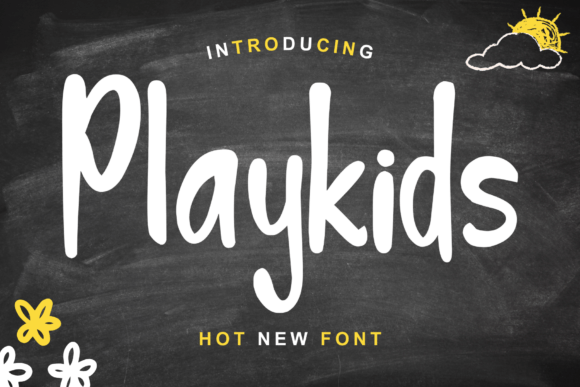
Typography plays a pivotal role in visual communication, often determining whether a design resonates with its intended audience or falls flat. Among the myriad of typefaces available today, Playkids has emerged as a distinctive option for designers seeking to capture a specific aesthetic. Described as an amazing font designed with the characteristics of a child’s handwriting in mind, it stands out with unrivaled power and presence. This attractive and bold typeface is carefully crafted to take creativity to the next level, leaving a lasting impression on viewers. However, selecting a font requires more than appreciating its visual appeal; it demands an understanding of its functional strengths, limitations, and ideal applications.
Understanding the Design Philosophy of Playkids
At its core, Playkids is not merely a standard sans-serif or serif typeface. It draws direct inspiration from the uninhibited, energetic strokes found in juvenile handwriting. Yet, unlike many novelty fonts that mimic this style with irregularity and inconsistency, Playkids balances organic charm with structural integrity. The font attracts attention with its bold strokes and strong characters, creating a striking and memorable visual impact. This duality—combining the innocence of childhood scribbles with the confidence of bold typography—makes it a unique tool in a designer’s arsenal.
The "unrivaled power" mentioned in its description refers to its weight and visibility. While many handwritten fonts are thin, delicate, or difficult to read at smaller sizes, Playkids maintains substantial thickness. This ensures that even when used in dynamic layouts, the text remains legible and commanding. For designers evaluating this typeface, it is essential to recognize that its primary function is to convey energy, approachability, and authenticity.
Why Designers Choose Playkids
There are several practical reasons why a creative professional might select Playkids over other display fonts. The most significant factor is its ability to humanize a brand or project. In an era where digital interfaces can feel cold or corporate, a font that mimics natural handwriting introduces a layer of warmth and relatability.
- Emotional Connection: The childlike aesthetic evokes nostalgia and trust, making it effective for brands targeting families or emphasizing simplicity.
- Visual Hierarchy: Due to its bold nature, Playkids works exceptionally well for headlines and short statements where immediate attention is required.
- Versatility within Niche: While primarily playful, its strong character structure allows it to be used in contexts that require a bit more seriousness than typical cartoonish fonts.
Furthermore, the font’s design helps break the monotony of grid-based layouts. Its irregular yet balanced forms add rhythm and movement to static designs, guiding the viewer’s eye through the content in a more engaging manner.
Benefits and Tradeoffs
Like any design element, Playkids comes with specific benefits and tradeoffs that must be weighed against project requirements. Understanding these factors is crucial for making an informed decision.
Key Benefits
The primary benefit of Playkids is its memorability. Because it deviates from standard geometric or humanist sans-serifs, it creates a distinct visual identity. Brands using this font are less likely to be confused with competitors who rely on generic typography. Additionally, its boldness ensures high contrast against various backgrounds, enhancing accessibility in terms of visibility, provided the color contrast ratios are maintained.
Potential Tradeoffs
However, the very characteristics that make Playkids attractive also impose limitations. Its stylized nature means it is not suitable for long-form body text. Reading paragraphs set in a bold, handwritten-style font can cause eye fatigue due to the lack of uniform spacing and letterform consistency found in traditional text faces. Moreover, the "childlike" association may undermine the perceived authority of brands in sectors such as finance, law, or high-end luxury, where precision and tradition are valued over playfulness.
Ideal Use Cases for Playkids
To maximize the effectiveness of Playkids, it should be deployed in contexts that align with its energetic and approachable personality. Here are situations where this font is a strong fit:
- Educational Materials: Textbooks, worksheets, and e-learning platforms for younger audiences benefit from the friendly tone of Playkids. It makes learning materials feel less intimidating and more inviting.
- Children’s Products and Packaging: From toy boxes to clothing labels, the font reinforces the target demographic’s identity. It signals immediately that the product is designed for kids.
- Creative Campaigns and Posters: Event posters for festivals, art workshops, or community gatherings can leverage the font’s bold strokes to create excitement and urgency.
- Digital Headers and Social Media Graphics: In social media feeds, where users scroll quickly, Playkids’ strong presence can stop the scroll and encourage engagement.
In these scenarios, the font does not just decorate the content; it enhances the message by aligning the visual tone with the subject matter.
When to Consider Alternatives
While Playkids is powerful, it is not a universal solution. Designers should consider alternative typefaces in the following situations:
If the project requires extensive reading, such as blog posts, legal documents, or technical manuals, a clean sans-serif like Inter or a readable serif like Merriweather would be more appropriate. These fonts prioritize legibility and neutrality, ensuring that the content remains the focus without visual distraction.
Additionally, if the brand identity demands sophistication, minimalism, or corporate professionalism, Playkids may appear too casual or immature. In such cases, a refined geometric sans-serif or a classic serif font would better communicate the desired values of stability and expertise.
Practical Decision-Making Insights
When evaluating whether Playkids aligns with your goals, consider the following steps:
First, define the emotional response you wish to evoke. If the goal is to inspire joy, curiosity, or comfort, Playkids is a strong candidate. If the goal is to instill confidence, authority, or exclusivity, look elsewhere.
Second, test the font in context. Do not judge Playkids solely by its alphabet chart. Place it in your actual design mockups alongside images, colors, and other graphical elements. Assess how its bold strokes interact with the surrounding whitespace. Does it dominate too much, or does it complement the layout?
Third, consider pairing. Playkids works best when paired with a neutral, simple font for supporting text. This contrast allows the headline to shine while ensuring the rest of the information is easy to digest. Avoid pairing it with other decorative or handwritten fonts, as this can create visual clutter and reduce readability.
Ultimately, Playkids is a specialized tool designed for specific communicative purposes. Its ability to combine the charm of childhood handwriting with bold, impactful presence makes it an excellent choice for projects that need to stand out and connect on a human level. By understanding its strengths and respecting its limitations, designers can use Playkids to create compelling, memorable visuals that resonate with their audience.