Dotstudio: A Modern Dot Font for Impact
In the crowded landscape of digital design, capturing attention within the first few seconds is no longer just an advantage; it is a necessity. Dotstudio emerges as a solution to this visual challenge, offering a modern and eye-catching Dot Font Display typeface that bridges the gap between playful creativity and professional precision. Meticulously crafted for striking visual impact, this font family is not merely a collection of letters but a design tool intended to elevate branding, headlines, and digital displays. Whether you are working on a sleek tech startup logo or a vibrant event poster, understanding how Dotstudio functions can help you make informed decisions about your typographic choices.
Understanding the Visual Language of Dotstudio
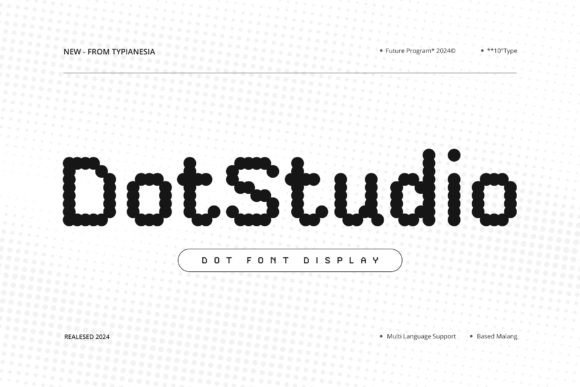
At its core, Dotstudio is defined by its innovative construction. Unlike traditional serif or sans-serif fonts that rely on continuous strokes, Dotstudio utilizes a dotted structure to form characters. This approach creates a sense of movement and futurism, making it inherently suitable for projects that aim to feel contemporary and forward-thinking. The font is designed with high legibility in mind, ensuring that despite its decorative nature, the message remains clear.
The inclusion of advanced typographic features sets Dotstudio apart from basic display fonts. It comes equipped with ligatures, which are special character combinations that improve the flow and aesthetic appeal of the text. Additionally, the font includes alternate characters, allowing designers to swap out standard glyphs for unique variations. This flexibility is crucial for creating custom looks without needing extensive graphic design manipulation. Multilingual support further expands its utility, ensuring that global brands can maintain consistent visual identity across different languages and regions.
Perspectives for Brand Strategists and Entrepreneurs
For entrepreneurs and small business owners, typography is often the silent ambassador of their brand. When evaluating a typeface like Dotstudio, the primary concern is usually alignment with brand values. If your business operates in the technology, gaming, or creative industries, the futuristic vibe of Dotstudio can reinforce a narrative of innovation. However, for more traditional sectors such as law or finance, this font might be better suited for specific marketing campaigns rather than body text or official documentation.
Consider a startup launching a new app focused on digital connectivity. Using Dotstudio for the app icon and main headlines can instantly communicate themes of networks, data points, and modern interaction. The commercial value here lies in differentiation. In a market saturated with clean, minimalistic sans-serifs, a well-executed dot font can make a brand memorable. Business owners should assess whether the font’s personality matches their target audience’s expectations. While it offers high impact, it requires careful pairing with simpler secondary fonts to avoid visual clutter.
Creative Applications for Designers and Marketers
Professional designers and marketers often prioritize versatility and technical robustness. Dotstudio addresses these needs by providing a comprehensive set of tools within the font file itself. The ability to toggle ligatures and access alternate characters means that a designer can create a unique logotype without leaving their design software. This efficiency saves time during the iterative design process, allowing for rapid prototyping of concepts.
For marketers creating social media graphics or digital advertisements, the eye-catching nature of Dotstudio is a significant asset. Digital displays require fonts that stand out on small screens and amidst fast-scrolling feeds. The bold structure of Dotstudio ensures readability even at smaller sizes, provided it is used for short bursts of text like headlines or call-to-action buttons. A practical example would be a promotional poster for a music festival. Using Dotstudio for the event name creates a dynamic, energetic feel that resonates with the youthful demographic, while a clean sans-serif can be used for the lineup details to ensure clarity.
Balancing Creativity with Readability
One common challenge with display fonts is maintaining readability. Dotstudio mitigates this through meticulous crafting, but users must still apply best practices. It is generally recommended to use Dotstudio for titles, logos, and short phrases rather than long paragraphs. The dotted style can become visually taxing if overused in body copy. By reserving Dotstudio for key visual elements, creators can maximize its impact without compromising the user experience.
Educational and Hobbyist Uses
Educators and hobbyists also find value in accessible yet professional-grade tools like Dotstudio. For teachers creating engaging classroom materials, the font can add a layer of fun and modernity to presentations and worksheets, particularly in subjects related to technology, science, or art. It helps break the monotony of standard textbook fonts and can capture students' interest.
Hobbyists, such as those designing personal blogs, zines, or party invitations, appreciate the ease of use. The font’s built-in features mean that even those with limited graphic design training can achieve a polished look. For instance, a hobbyist photographer creating a portfolio website might use Dotstudio for section headers to give the site a gallery-like, curated feel. The learning value here is significant; experimenting with ligatures and alternates teaches users about typographic hierarchy and detail, skills that are transferable to other design areas.
Technical Flexibility and Long-Term Usefulness
When investing in a typeface, longevity is a key consideration. Dotstudio’s multilingual support ensures that it remains useful as projects expand globally. For freelancers who work with international clients, having a font that supports various character sets reduces the need to source additional typefaces, streamlining the workflow. The reliability of the font across different platforms—whether in print brochures or on mobile apps—adds to its long-term usefulness.
Moreover, the adaptability of Dotstudio allows it to evolve with design trends. While dot-based fonts have a distinct futuristic association, their clean lines also fit well within minimalist design frameworks. This duality ensures that the font does not quickly become dated. Users can adjust the spacing, size, and color to suit changing aesthetic preferences, making it a versatile addition to any design toolkit.
Making the Right Choice for Your Project
Deciding whether Dotstudio is the right fit depends on your specific goals. If you need a font for dense textual content, a traditional serif or sans-serif might be more appropriate. However, if your project demands immediate visual impact, modern flair, and a touch of technological sophistication, Dotstudio excels. It is ideal for:
- Logo Design: Creating memorable brand marks that stand out.
- Headlines and Posters: Drawing attention to key messages in print and digital media.
- Digital Displays: Enhancing user interfaces and web banners with a contemporary look.
- Branding Materials: Adding a cohesive, futuristic identity to business cards and packaging.
Ultimately, Dotstudio serves as a powerful instrument for those looking to infuse their work with energy and modernity. By understanding its strengths and limitations, users across various fields—from seasoned professionals to enthusiastic beginners—can leverage its unique characteristics to create compelling, visually striking designs. The key lies in intentional application, ensuring that the font enhances the message rather than overpowering it.